
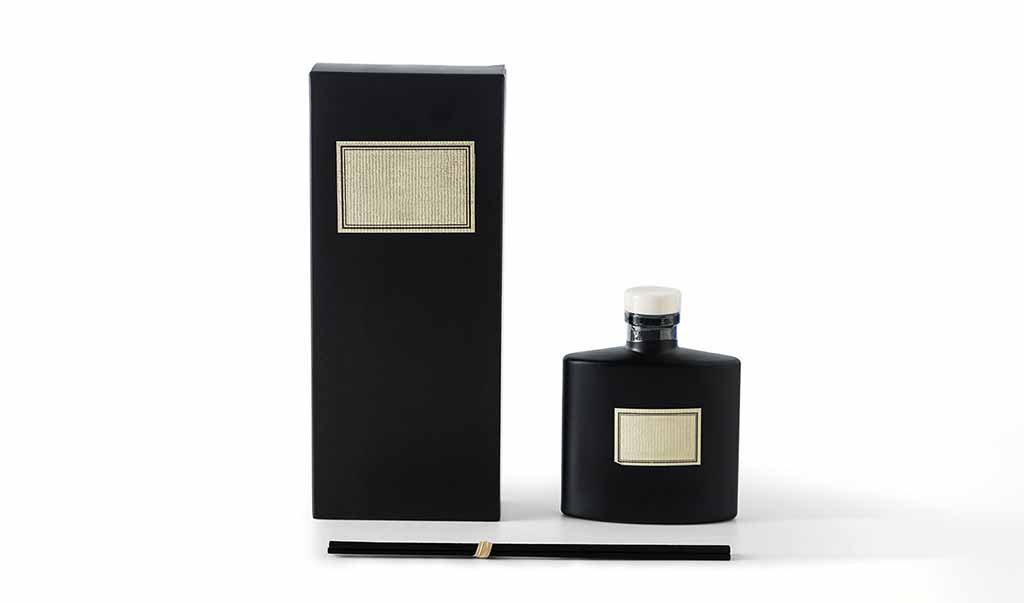
Launching a private-label home fragrance line looks exciting; however, the path from idea to shelf often feels complex. This guide explains OEM Reed Diffuser choices step by step. As a result, you can move from sampling to shipment with confidence, even with a practical MOQ 500. For deeper options and specs, see our Home Fragrance Wholesale (OEM Program).
Market Opportunities for OEM Reed Diffuser in 2025
New brands usually face three hurdles: low-risk starting quantities, coherent packaging, and basic compliance. Fortunately, today’s OEM supply chains make all three achievable.
-
Entry barrier: Retailers want consistent scent throw and safe formulations. Therefore, you need a proven base oil, quality fragrance, and tested reeds.
-
Differentiation: Larger-format bottles (e.g., 150–200 ml), refill bundles, and eco-aware packaging drive higher AOV. Cohesive sets—diffuser + candle + refill—lift perceived value.
-
Factory leverage: Our facility runs 3 automatic filling lines, 2 candle lines, plus dozens of manual packing lines. Consequently, small brands can start lean and scale fast with an OEM Reed Diffuser set.
External references for trends and safety: IFRA Standards, EU CLP overview, REACH basics.
Fast Decision Framework for OEM Reed Diffuser Customization
To reduce rework, lock the following choices in this order:
-
Base & Load
-
Carrier: DPM/DPG, Augeo-type, or IPM blends—choose by local rules and desired evaporation.
-
Fragrance load: typically 10–18% depending on IFRA limits and scent strength goals.
-
Oils: source from leading houses such as Firmenich, Givaudan, OGAWA, and CPL for reliable quality.
-
-
Reeds
-
Fiber reeds give fast capillary action; natural rattan offers classic aesthetics.
-
Lengths 20–25 cm work for 100–200 ml bottles; start with 6–8 pieces.
-
Browse reference styles on our Reed Diffuser category.
-
-
Bottle & Finish
-
Volume: 100 / 150 / 200 ml.
-
Neck finish must match cap or stopper (wood, aluminum, bamboo, ceramic).
-
Decoration: matte spray, gradient, hot foil, silk screen, or label + metal badge.
-
-
Closure & Safety
-
Leak tests for cap + PE/PS/PP liners; travel plugs for e-commerce.
-
-
Gift Box & Inserts
-
Drawer box or book-style with EVA or pulp tray.
-
Add refill slot to upsell. Consider pairing with a candle collection to lift AOV: OEM Scented Candle.
-
Sampling Checklist
-
Final scent brief + usage level
-
Base oil selection + IFRA category confirmation
-
Reed type & length
-
Bottle volume + finish + labeling method
-
Cap/stopper fit test + travel plug
-
Gift box dieline + tray material
-
Master carton spec + drop/tilt test plan
MOQ 500 OEM Reed Diffuser: From Sampling to Mass Production
Typical steps with OEM Reed Diffuser projects at MOQ 500 keep risk low while giving retailers a tangible set to trial.
-
Week 1–2 | Scent & Pack Alignment: Approve 2–3 scents and one bottle family; confirm labeling and box dielines.
-
Week 3 | Pre-production Samples (PPS): Receive filled samples with final reeds and full packaging; run leak and scent throw tests.
-
Week 4–5 | Material Kitting & Pilot: All components arrive; the line runs a pilot for QC sign-off.
-
Week 6 | Mass Production: Lines run; QC checks at filling, capping, and packing.
-
Week 7–8 | Shipment: Booking, export docs, and pickup. For common questions, see the FAQ section on our About page.
Why 500 works: It validates demand, images, and logistics. Then, you can reorder faster with locked BOMs.
Compliance & Testing for Private-Label Reed Diffuser
Safety builds trust and prevents costly relabeling.
-
IFRA guidance: Confirm category and maximum fragrance dosage; maintain the latest certificates via the official IFRA Standards.
-
EU CLP/REACH basics: Provide CLP labels (pictograms, signal words, H-/P-statements) and SDS/MSDS in the correct language—see CLP and REACH.
-
Transport: Check UN classifications for limited quantities if applicable; outer cartons need orientation labels for liquids.
-
Local rules: We support compliance testing and labeling to local requirements—contact our team.
Common mistakes to avoid: tiny font sizes on labels, missing UFI where required, and unverified fragrance percentages in OEM Reed Diffuser formulas.
Cost Breakdown & Profit Levers for OEM Reed Diffuser
A clear BOM helps you price confidently.
Typical BOM components
-
Bottle + finish
-
Reeds
-
Base oil + fragrance load
-
Cap/stopper + travel plug
-
Labels / screen print / foil
-
Gift box + tray + insert
-
Inner + master cartons
-
Labor, QC, and wastage
Margin levers
-
Refill strategy: Offer 150–200 ml refills; margins improve while customers return sooner.
-
Kitting: Bundle diffuser + candle + refill to raise AOV.
-
Packaging tiers: Keep one premium finish and one standard finish to manage costs per channel.
-
Volume breaks: Re-quote at 1,000 / 3,000 units after first run.
Project Timeline & Milestones for OEM Reed Diffuser (6–8 Weeks)
Week 0: PO + 30% deposit + final spec sheet
Week 1–2: Scent confirmation + packaging proofs
Week 3: PPS approval (green light to kit materials)
Week 4–5: Material inbound + pilot run + QC sign-off
Week 6: Mass production + stability checks
Week 7–8: Final balance, booking, export, and pickup
Deliverables at each gate: approved fragrance list, decorated bottle sample, label artwork PDF, box mock-ups, and signed PPS.
Brand & Merchandising Tips for Custom Reed Diffuser
Because premium brands sell the system, not a single SKU, build a narrative and present a clean kit.
-
Fragrance architecture: Organize by families (Citrus, Floral, Woody, Aromatic). Then, create three signature blends for recognition.
-
Series naming: Tie names to design cues or locales; keep a short two-word pattern.
-
Photography list: Hero (bottle + reeds + box), lifestyle on console table, detail shots for finishes, leak-proof cap close-up, and refill usage scene.
-
Unboxing: Add a scent card, QR to care guide, and instructions for reed flipping.
-
Retail display: Place testers near traffic flow; rotate reeds weekly for scent refresh.
Quality Control Checklist for OEM Reed Diffuser
We maintain checkpoints to keep every batch consistent.
-
Incoming QC: Glass tolerance, cap fit, label adhesion, box strength.
-
Filling QC: Net fill accuracy, leak test after capping, torque record.
-
Aging test: 48–72 h upright + inverted; ambient stability check.
-
Final QC: Carton drop test and random sniff test for throw and balance.
If any non-conformance appears, we isolate, correct, and re-inspect before release.
Logistics & Lead Time FAQs (Private-Label Reed Diffuser)
-
Lead time: Typically 6–8 weeks including PPS and mass production, excluding transit.
-
Shipping to EU/UK/US/AU: EXW/FOB/CIF quotes available; DDP on request.
-
Samples: Paid or refundable with PO; express courier available.
-
Reorders: Faster, because BOM and artwork are locked.
Next Step — Start Your OEM Reed Diffuser Sampling
Download the sampling checklist, choose two bottle finishes, and confirm three scents to start. Then, we ship PPS within the agreed window. Finally, we lock your BOM and produce with MOQ 500.
-
Start with our Home Fragrance Wholesale (OEM Program)
-
Browse Reed Diffusers
-
Explore matching sets: OEM Scented Candle
-
Ask compliance questions or request quotes: Contact our team
-
Read standards: IFRA Standards · EU CLP · REACH
OEM vs ODM vs Private Label: What Each Term Actually Commits You To
The three terms get used interchangeably in sourcing conversations, and the difference decides how much of the product you actually own.
Private label begins with a product that already exists — you take the bottle, the formula and the structure, and apply your own branding. It is the fastest and least expensive route to market, and it is the right starting point for most first orders.
OEM means the product is built to your specification: your bottle, your fragrance direction, your packaging structure, your branding. You define the product; the factory manufactures it.
ODM means the factory also carries the design and development work, including new tooling where it is required. Because Runfan develops roughly 200 new product designs in-house each year, an ODM brief can often begin from a proven structure rather than a blank sheet.
Most real programs blend the three. The practical sequence is to start with stock-plus-label to test the market, then move to full custom once you have sales evidence — the volume thresholds for each stage are set out in our reed diffuser MOQ guide.
Factory-Direct, Trading Company or a Typical Supplier: Where the Money Actually Goes
The most expensive mistake in home fragrance sourcing is comparing unit prices between suppliers that are not doing the same job. A trading company quotes a price for a product it does not make, from a factory you cannot audit. The table below compares the same brief across the three routes buyers actually consider.
| Decision factor | Factory-direct (Runfan) | Trading company | Typical supplier |
|---|---|---|---|
| Minimum order | 500 units per scent/bottle design; 100–200 on stock-plus-label | Often lower — because it aggregates across several factories | Usually higher, or negotiable only on repeat orders |
| Who makes the product | Our own factory in Yixing, Jiangsu | A third party you do not contract with | Itself, but with limited line flexibility |
| Unit cost structure | No intermediary margin | Includes the trader’s margin on every unit | Low headline price, add-ons billed separately |
| Sampling | 5–7 working days, fee deductible from the bulk order | Slower — the request is relayed to a factory | Varies; often a fixed sample charge |
| Production lead time | 15–25 days for standard custom reed diffuser runs | Factory time plus relay time | Longer and less predictable in peak season |
| Fragrance access | Oils from Firmenich, Givaudan, OGAWA and CPL; source disclosed on request | Rarely able to disclose the oil house | Often undisclosed or generic |
| Quality control | 3 automated filling lines; incoming inspection, finished-goods check and pre-shipment sampling | Depends entirely on the factory’s own QC | Basic QC; third-party inspection usually extra |
| Compliance documents | MSDS, IFRA statements, ISO 9001 and BSCI documentation with the order | Passed through, with the producing site’s name often unclear | On request, sometimes at extra cost |
| Design and product development | ~200 new designs developed in-house each year | Limited; works from what factories already offer | Copy-based rather than development-based |
| Third-party inspection | Supported and welcomed | Difficult to arrange — no single site owns the order | Supported |
| Who you talk to | Direct export team, no relay layer | An account manager between you and production | Sales only; production contact rare |
For the full cost model behind this table — including the cases where a trading partner genuinely wins — see factory-direct vs trading company. If you are weighing production countries rather than supplier types, our comparison of China, Vietnam and India for home fragrance manufacturing covers fragrance access, glass supply, compliance audits and dual-sourcing.
Certifications You Can Verify Independently
Documentation should arrive with the order, not after a buyer asks twice. For Runfan orders this includes IFRA compliance statements for the exact formulation supplied, MSDS for the fragrance and base, and third-party certification you can check without taking our word for it:
- ISO 9001 — certificate 25026Q00156R053
- amfori BSCI social compliance — monitoring ID 25-0363070
Both numbers can be verified independently through the issuing bodies, and we would rather you checked. The producing entity is Suzhou Runfan Home Decoration Co., Ltd., manufacturing at our own facility in Yixing, Jiangsu — so the site named on the certificate is the site that makes your order.
OEM Reed Diffuser: Buyer Questions We Get Most Often
What is the MOQ for a custom reed diffuser OEM order?
500 units per scent and bottle design for full-custom OEM/ODM. If you choose a stock product with light customization — your own label applied to an existing best-seller — orders can start at 100–200 units, which is the usual route for market testing, pop-ups and corporate gifting.
How long does sampling take, and is the sample fee refundable?
Samples ship in 5–7 working days. A sample fee applies and covers fragrance, materials and labor; it is deductible from your subsequent bulk order, which effectively refunds it. Ask your sales contact to confirm the policy in writing before paying.
Can you develop a custom fragrance, and who owns the formula?
Yes. You can select from 50+ established formulas or brief us on a custom direction, developed with oil houses including Firmenich, Givaudan, OGAWA and CPL. Formula ownership and exclusivity terms are agreed at the quotation stage — raise it there, before development begins, so the terms match your brand strategy.
Which certifications does your factory hold, and can I verify them?
ISO 9001 — certificate 25026Q00156R053 — and amfori BSCI social compliance, monitoring ID 25-0363070. IFRA compliance statements and MSDS documentation accompany the order. Both certificate numbers can be checked independently with the issuing bodies.
How do you control quality on a large order?
Four stages: incoming inspection of glass, caps, sticks and oils against the approved sample; in-process checks across three automated filling lines; a finished-goods check of label position, scent throw and packaging integrity; and pre-shipment sampling before cartons are sealed. Third-party inspection is supported at any stage.
How long does production take, and does peak season change it?
Production runs 15–25 days for standard custom reed diffuser orders once the formula and packaging are approved. Planned end to end — fragrance confirmation, sampling, production and QC — allow 45–60 days (6–8 weeks). Before Christmas, Valentine’s Day and Mother’s Day, book your production slot early; industry capacity tightens and standard timings stop being safe assumptions.
Can I produce under my own brand and packaging?
Yes — that is the standard OEM arrangement. Packaging covers your label, box, gift-set structure and inserts, with colour coordinated across glass finish, liquid and sticks. Private-label printing on stock formats is available from 100–200 units if you want to test the market before committing to full custom.
Who owns the tooling if we develop a custom bottle?
Tooling and mould ownership terms are set at the quotation stage alongside formula exclusivity. Agree them in writing before development begins rather than after the first production run — the terms are straightforward when they are settled early and expensive when they are not.
Written by Ken, Brand Promotion Manager at Runfan — helping importers, retailers and e-commerce brands bring private-label home fragrance to market. Connect on LinkedIn
Verified by order: MOQ from 500 units per SKU · Samples in 5–7 working days · ISO 9001 25026Q00156R053 · amfori BSCI 25-0363070 · Produced at our own factory in Yixing, Jiangsu.