
Our review of reed diffuser trends 2026 highlights a clear shift in buyer interest. Fragrance still matters, but product design, refillability, gift-ready packaging and brand differentiation now shape the buying decision.
A worldwide Google Trends review covering June 2025 to mid-July 2026 supports that direction. June 2026 showed the highest relative interest among the selected months. Rising searches also included luxury, black, natural, organic and extra-large reed diffuser concepts.
However, these figures represent normalized search interest, not absolute monthly search volume or confirmed sales. They reveal useful questions for brands planning a new private label reed diffuser range.
Therefore, this guide turns those questions into practical sourcing decisions. It covers product concepts, formulation testing, packaging, refills, gift sets and OEM/ODM supplier selection.
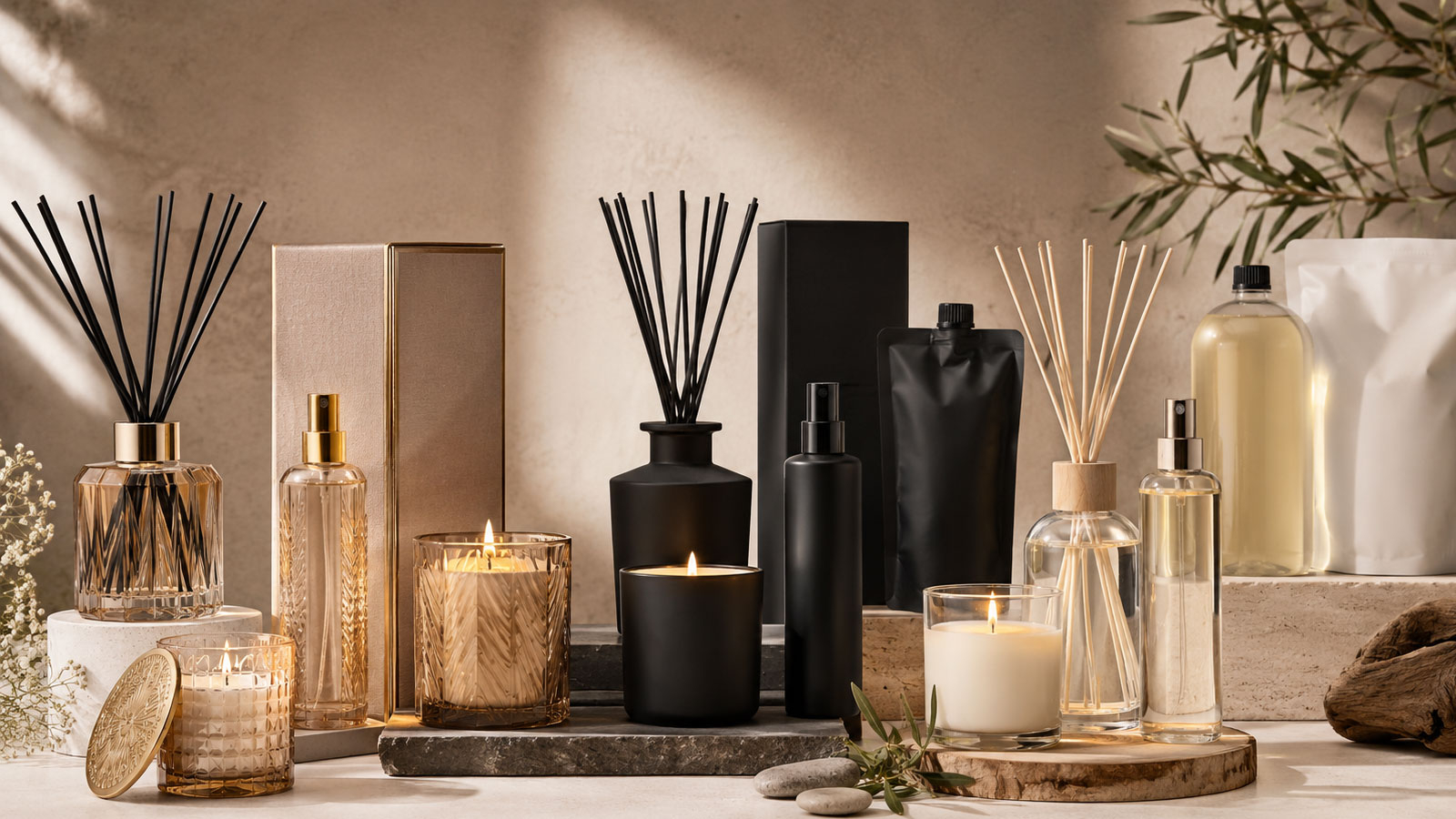
Reed Diffuser Trends 2026 at a Glance
Overall, the strongest opportunities do not come from one bottle or one fragrance. Instead, they come from product systems that help a brand tell a clear story.
- Luxury reed diffusers: Design-led bottles, refined finishes and gift-quality boxes support premium positioning.
- Black reed diffusers: Dark bottles and monochrome packaging create strong shelf recognition.
- Natural positioning: Buyers want simpler stories, but every natural or organic claim needs evidence.
- Reed diffuser refills: Refills can support repeat sales and extend a coordinated product range.
- Reed diffuser gift sets: Sets create seasonal, wedding, housewarming and corporate-gift opportunities.
- Fresh seasonal scents: Citronella, lemongrass, citrus, tea and herbal profiles attract summer interest.
- Extra-large formats: A 2000ml statement diffuser can suit hospitality projects, subject to testing.
For buyers, the next step is not to copy every trend. First, choose the trends that fit your target customer, price position and sales channel.
1. Luxury Reed Diffusers Move Beyond Fragrance Alone
A luxury reed diffuser is now a visual product as much as a fragrance product. First, customers see the bottle, cap, reeds and box. Then they experience the scent.
A premium project should begin with one design language. A brand might choose heavy glass, a ceramic vessel, a sprayed finish or a clean architectural bottle. The cap can add warmth, contrast or a metallic accent.
Small details influence the final impression. Reed color, label texture, print finish and box construction should work together. A beautiful bottle in a weak box rarely feels luxurious.
However, design choices create technical questions. Sprayed glass needs scratch checks. Decorative printing needs adhesion testing. Heavy components need stronger inserts and shipping cartons.
Before asking a reed diffuser manufacturer for a quotation, define three things:
- The expected retail position.
- The preferred visual direction.
- The sales channel and shipping method.
2. Black Reed Diffusers Create Strong Collection Identity
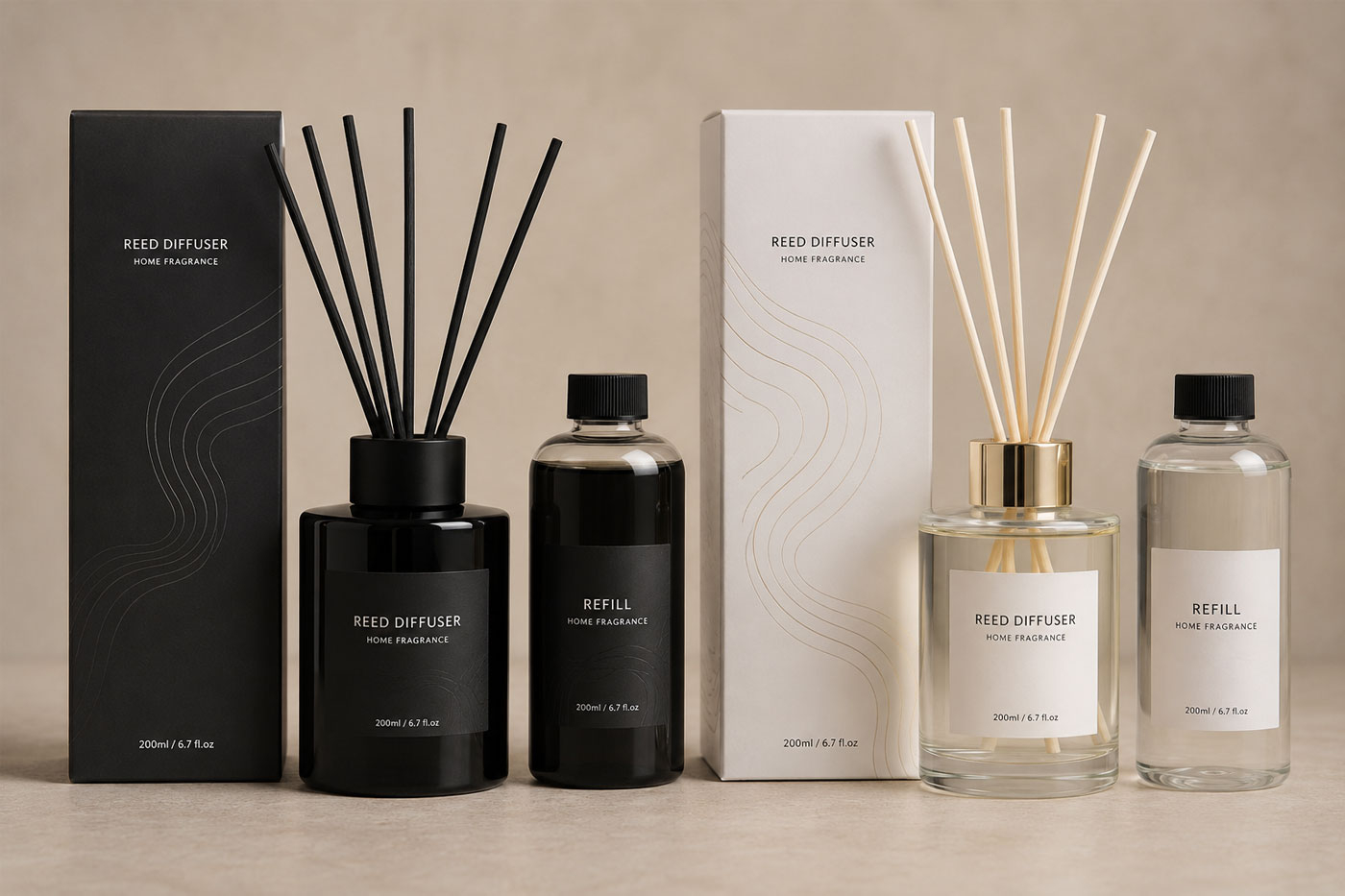
Search growth around the term black reed diffuser reflects the appeal of simple, bold styling. Likewise, black can support minimalist, masculine, hotel-inspired or evening-themed collections.
Yet “black” is not one specification. Buyers can choose black glass, sprayed clear glass, a black label or an opaque coating. They can also combine black with wood, gold, silver or stone-inspired details.
Each route creates different risks. A coating may show fingerprints or scratches. A dark bottle can also make the fill level harder to inspect. Some label adhesives or inks behave differently on coated surfaces.
Ask the supplier to confirm:
- How the black finish is produced.
- Whether the finish contacts the fragrance liquid.
- Which decoration methods suit the surface.
- How the bottle will be protected during transport.
- Whether production samples match the approved color standard.
For a coordinated range, repeat one or two visual elements across the diffuser, refill and gift box. This creates recognition without making every item identical.
3. Natural and Organic Positioning Requires Proof
Among the directions reviewed here, natural and organic positioning requires the most careful wording.
The terms natural reed diffuser and organic reed diffuser attract attention because buyers want clearer ingredient and sustainability stories. Still, these words are not interchangeable.
A natural positioning may refer to ingredient origin, visual style, packaging materials or fragrance direction. An organic claim usually needs a defined standard and evidence for the exact materials involved.
As a result, brands should not begin with a broad claim. They should begin with a claim brief.
For example, decide whether the goal concerns the diffuser base, fragrance ingredients, reeds, bottle, label, box or the whole product. Then ask what documents can support that statement in the target market.
The same discipline applies to words such as “eco-friendly,” “non-toxic” and “sustainable.” A recycled paper box does not automatically make the full product sustainable. Likewise, a botanical scent name does not prove that every fragrance ingredient is natural.
Therefore, a responsible private label reed diffuser project connects marketing language to evidence. It also reviews the claim before packaging is printed.
4. Reed Diffuser Refills Can Support Repeat Sales
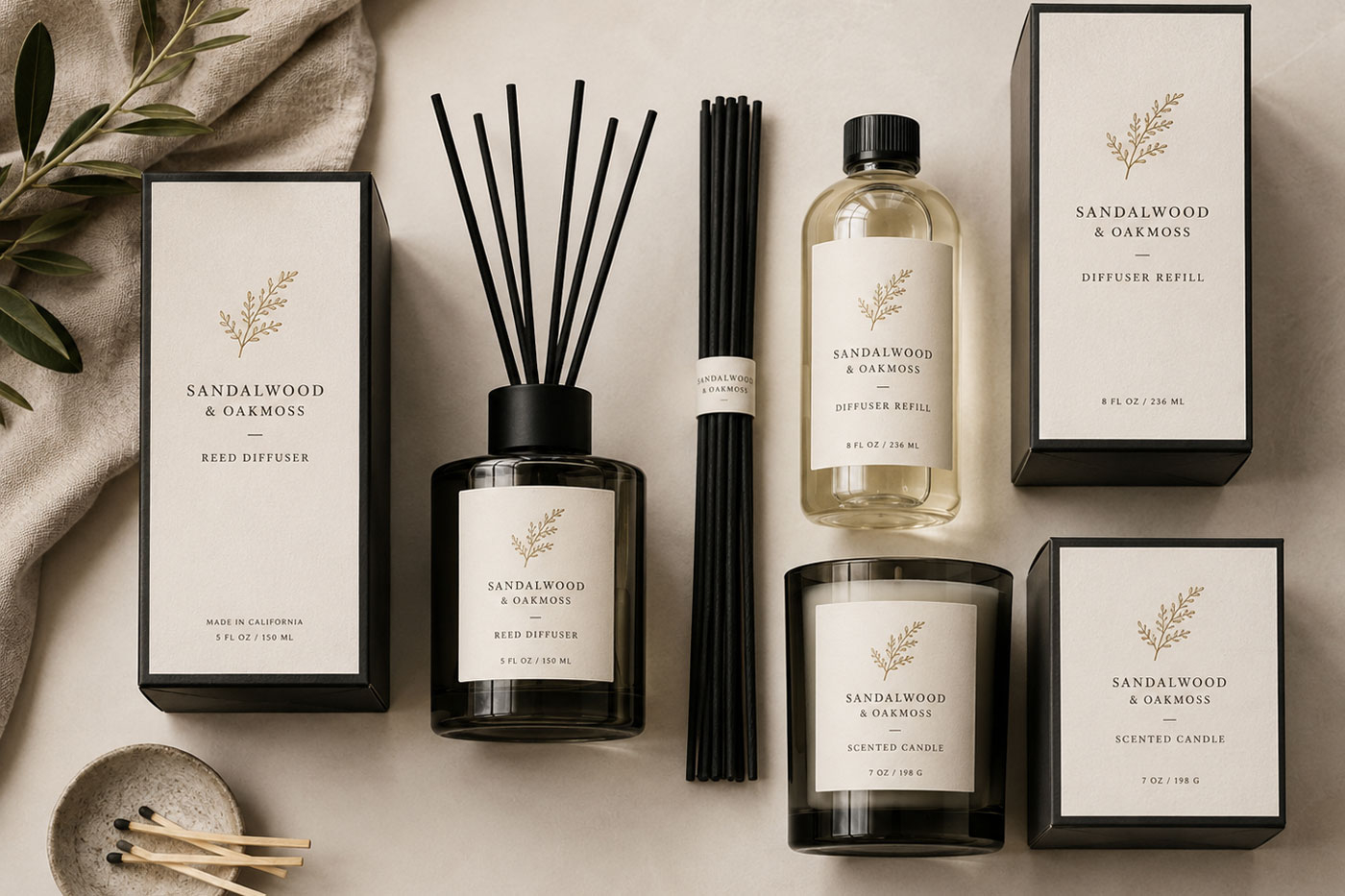
A reed diffuser refill gives customers a reason to return after the original product is empty. It can also reduce the need to purchase another decorative vessel.
A refill is more than a larger bottle of liquid. The packaging needs a controlled pouring experience, a secure closure and clear instructions. It may also need replacement sticks because used reeds can become less effective or carry traces of the previous scent.
When developing a refill program, decide:
- Which diffuser sizes the refill will serve.
- Whether replacement reeds are included.
- Whether one refill supports one or several fragrance uses.
- How customers identify compatible scents and bottles.
- How the closure and outer box reduce leakage risk.
Brands should also test the refill bottle during distribution. A package that works on a retail shelf may behave differently in parcel delivery.
5. Reed Diffuser Gift Sets Expand Seasonal Opportunities
A reed diffuser gift set can combine a diffuser with a candle, room spray, refill or smaller companion scent. As a result, the product can suit holidays, weddings, housewarming and corporate gifting.
In practice, reed diffuser sets with sticks provide a complete product format, while larger boxes can support premium gifting.
Nevertheless, every added component increases development work. The insert must hold each item safely. The carton must protect glass products. Meanwhile, the design should remain easy to open and present.
Before approving a set, review the total weight, carton size, insert material and unboxing sequence. Confirm whether the same fragrance story works across every product format.
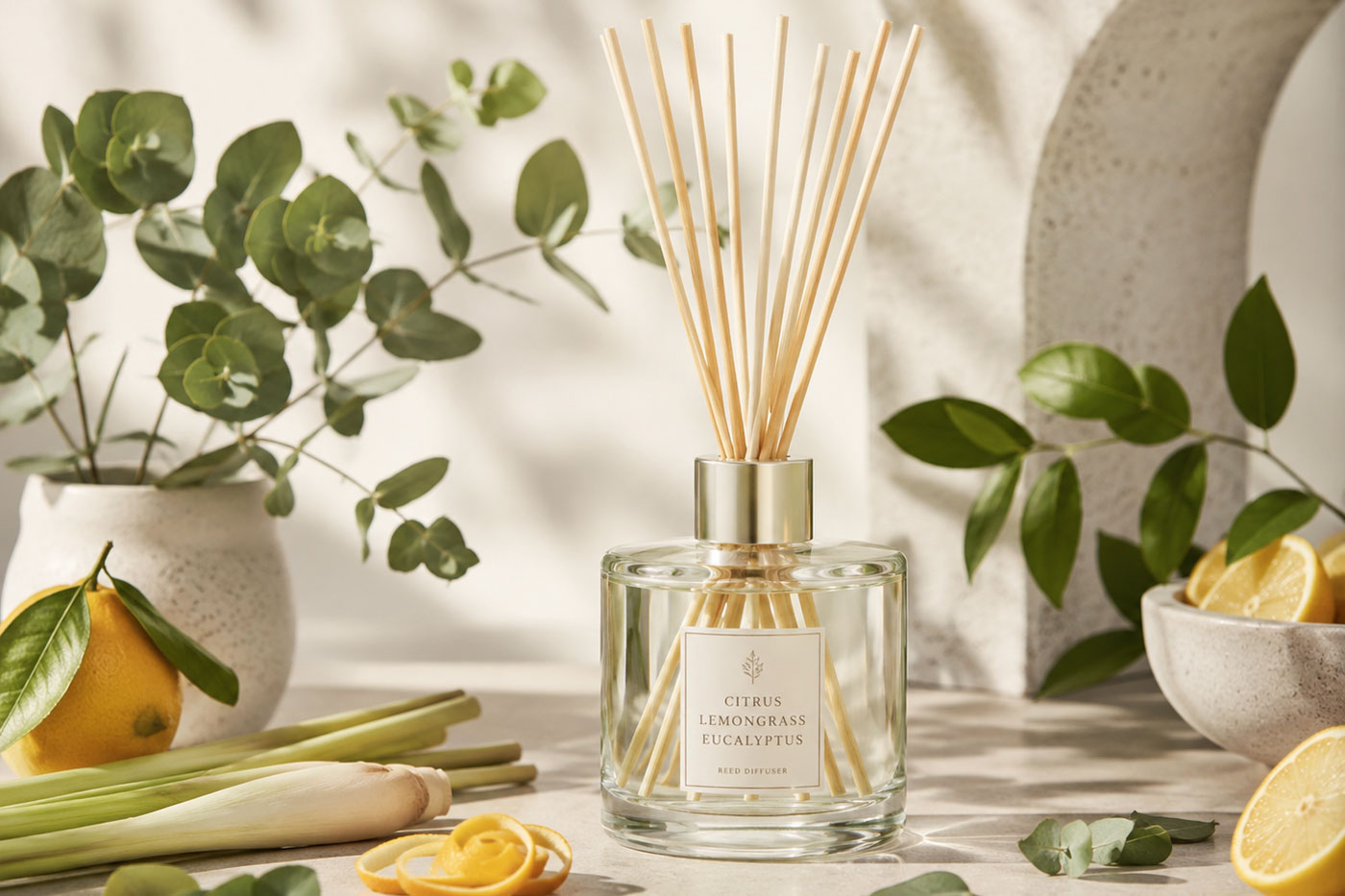
6. Citronella and Fresh Scent Directions Gain Summer Interest
The rising search term citronella reed diffuser points to seasonal interest in bright, fresh and outdoor-inspired fragrance stories. For example, related directions may combine citronella facets with lemongrass, citrus, eucalyptus, green tea or aromatic herbs.
For a brand, the opportunity lies in the scent story and seasonal presentation. In addition, fresh colors, botanical graphics and simple fragrance notes can create a clear summer collection.
However, fragrance language must stay accurate. A citronella scent does not automatically make a reed diffuser an insect-repellent product. Claims about repelling insects can trigger different evidence and regulatory requirements.
Therefore, describe the fragrance profile unless the exact formula and target market support a stronger claim. The product name, label, website copy and advertising should use the same approved position.
7. Extra Large Reed Diffuser 2000ml Projects Need Engineering
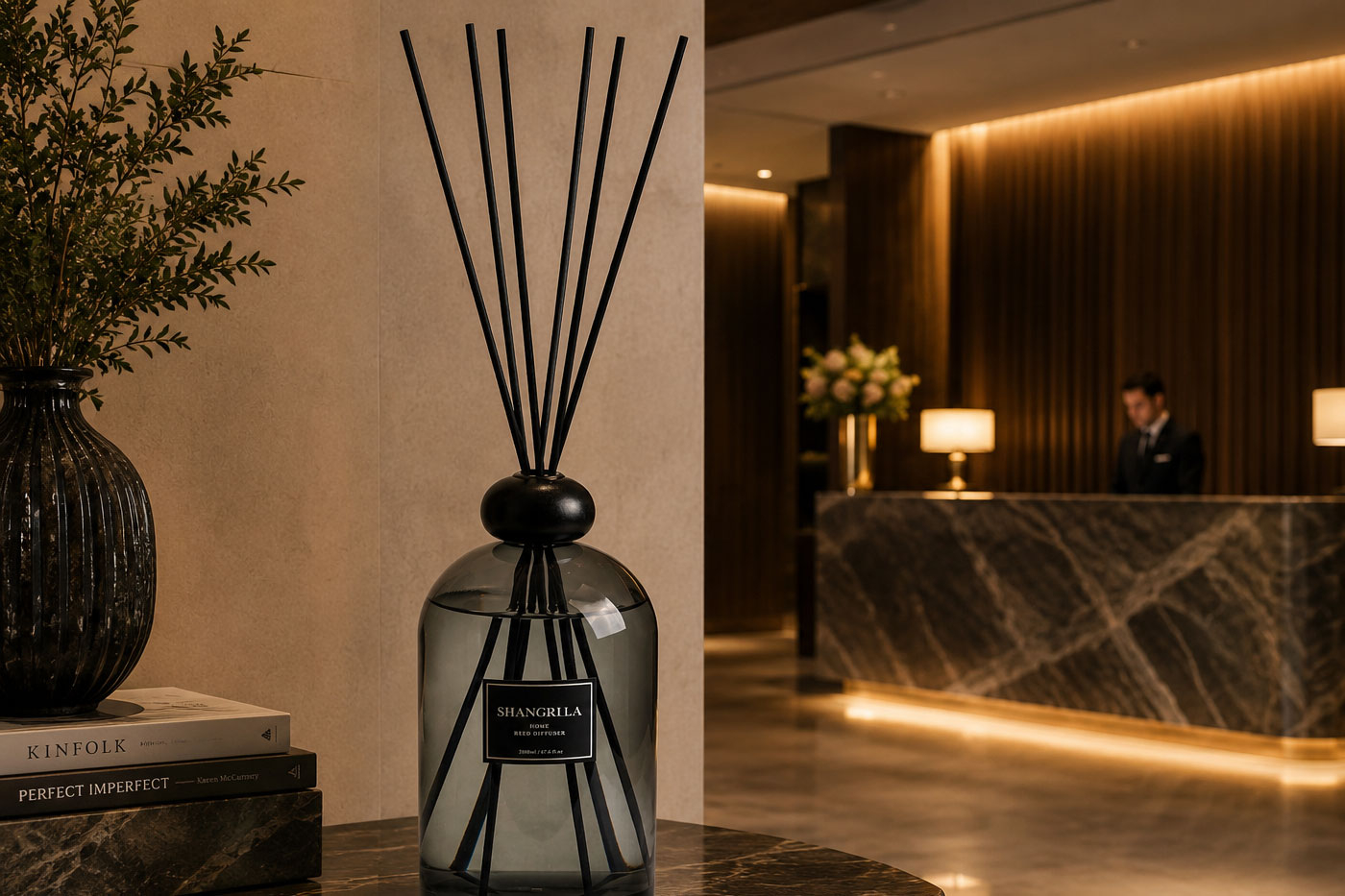
Oversized formats require especially careful engineering.
Interest in an extra large reed diffuser 2000ml reflects demand for statement products. Hotels, reception areas, showrooms and large homes may use oversized vessels as decorative focal points.
Still, a larger fill does not automatically create better fragrance coverage. Vessel shape, neck diameter, reed length, reed count, airflow and formula all affect performance.
In addition, an oversized project creates practical concerns:
- A wide or tall vessel needs stable proportions.
- Long reeds need suitable packaging and protection.
- The liquid and vessel add shipping weight.
- Large packages need stronger inserts and cartons.
- Leakage and drop risks may increase during transport.
- The product needs realistic room and duration testing.
For these reasons, treat 2000ml as a custom development project. Ask the supplier to confirm available vessels, testing steps, packing design and order requirements before using it in a launch plan.
8. How Does a Reed Diffuser Work?
Many buyers still ask, how does a reed diffuser work? The answer is simple, but the product details matter.
First, the sticks absorb fragrance liquid from the bottle. Capillary action moves that liquid upward. The fragrance then evaporates from the exposed reed surface and disperses into the surrounding air.
Meanwhile, reed material, diameter, length and count influence that process. So do the bottle neck, diffuser base, fragrance composition, temperature and airflow.
For example, more sticks can increase the exposed surface area. However, they can also increase liquid consumption. Likewise, stronger airflow may make a scent feel more noticeable while shortening product life.
Therefore, brands should evaluate diffusion and longevity together. A product that empties quickly is not automatically better than one with balanced performance.
9. What Is the Best Carrier Oil for a Reed Diffuser?
The phrase best carrier oil for reed diffuser often appears in DIY searches. However, commercial development asks a broader question: which diffuser-base system performs consistently with the chosen fragrance, vessel and reeds?
Because no universal system works for every project, a suitable system should balance several factors:
- Fragrance compatibility.
- Wicking performance.
- Evaporation profile.
- Clarity and color stability.
- Base odor.
- Material compatibility.
- Applicable safety and transport information.
Moreover, a formula that works with one fragrance may not perform the same way with another. For instance, some fragrance materials can change color, affect clarity or alter the evaporation pattern.
Therefore, test the complete liquid, bottle, closure and reed combination under intended storage conditions. Buyers should evaluate approved samples, not generic online recipes.
10. How Long Do Reed Diffusers Last?
Meanwhile, buyers ask how long do reed diffusers last? No responsible supplier should give one universal answer.
For example, product life depends on:
- Fill volume.
- Bottle-neck size.
- Reed type, length and quantity.
- Fragrance and base system.
- Room temperature.
- Airflow and placement.
- How often the customer flips the reeds.
For example, a small diffuser in a warm, ventilated room may empty faster than the same product in a cooler space. Frequent reed flipping can also increase evaporation.
If duration matters to the sales claim, define a test method. Use consistent samples, reed counts, room conditions and measurement intervals. Then write packaging guidance that reflects the tested product rather than a category-wide promise.
11. What Can a Private Label Reed Diffuser Brand Customize?
A custom reed diffuser can range from a logo change to a distinctive range. Meanwhile, an OEM reed diffuser or ODM reed diffuser may involve deeper development.
Common customization areas include:
Fragrance direction
Choose a fragrance family, mood, target intensity and price position. For example, a supplier may recommend existing fragrances or develop samples around a brief. Avoid requesting an identical copy of another brand’s scent.
Bottle and finish
Options may include existing glass shapes, custom colors, sprayed finishes, ceramic vessels or special decorative treatments. However, availability and order requirements depend on the component and process.
For a design example, review these custom bouquet reed diffuser options. Reconfirm every page-specific detail for the final project.
Cap and reeds
Wood, polymer, metal-effect or other cap styles can change the look. Likewise, reed material, dimensions, quantity and color influence both design and performance.
Label and decoration
Brands may use labels, screen printing, hot stamping or other decoration methods. Therefore, the chosen surface and finish should support the process.
Box and gift configuration
A simple carton suits some retail channels. Meanwhile, others need rigid boxes, sleeves, inserts or coordinated gift sets.
Range architecture
The diffuser can connect with refills, room sprays, candles or travel formats. In addition, a shared fragrance and design system makes the collection easier to recognize.
HighlyScent’s private label fragrance FAQ outlines current customization areas. Final feasibility, quantities and timing should be confirmed against the selected design.

12. How to Choose an OEM/ODM Reed Diffuser Manufacturer
A capable manufacturer should turn reed diffuser trends 2026 into testable specifications. Moreover, the reed diffuser manufacturer should explain what is standard, custom or untested.
Use the following checklist during supplier evaluation.
Product-development experience
For example, ask for relevant product examples and available component routes. A capable supplier should explain the difference between a quick private-label project and deeper ODM development.
A clear sampling process
The sample plan should identify what the buyer is approving. For instance, approval may include fragrance, liquid color, bottle finish, decoration, reeds, box structure and final presentation.
Testing and quality checkpoints
Discuss fragrance compatibility, stability, leakage, decoration adhesion, packing protection and finished-product inspection. Because every project differs, define the test plan before production.
Documentation awareness
Depending on the formula and destination, buyers may need an SDS, fragrance-related information, classification inputs, label review or transport documents.
The IFRA Standards support the fragrance industry’s safe-use framework. However, they do not replace local law or a product-specific safety assessment.
For the EU, the European Commission’s CLP overview explains classification, labeling and packaging rules for substances and mixtures. The exact requirements depend on the formula, classification, packaging and supply-chain role.
For EU projects, ECHA’s poison-centre steps for industry help buyers assess whether a Unique Formula Identifier (UFI) and poison centre notification (PCN) apply. Applicability depends on classification, supply-chain role and market placement. Transport tests and documents depend on the finished pack, route and carrier.
Packaging and shipping knowledge
Because reed diffusers combine liquid, glass and long sticks, packaging deserves a separate review. Ask how the supplier manages leakage risk, inserts, carton strength and shipment preparation.
Transparent quotation assumptions
A useful quotation states the included bottle, fragrance fill, cap, reeds, decoration, box, packing and testing assumptions. It should also identify which costs may change after sample approval.
HighlyScent’s legal entity and manufacturing-facility roles page provides first-party company information. However, buyers should verify current capabilities and project fit.
13. A Typical Private Label Development Process
Overall, a structured process reduces misunderstandings and protects the launch schedule.
- Define the brief. Share the target market, channel, customer, price position, quantity range and launch date.
- Choose the development route. Decide between a proven product, light customization or deeper OEM/ODM work.
- Develop fragrance and packaging samples. Confirm what each sample stage is meant to approve.
- Review performance and presentation. Check fragrance, appearance, diffusion, stability and packaging.
- Approve specifications. Record components, artwork, color references, packing and quality requirements.
- Produce and inspect. Use agreed checkpoints for incoming materials, filling, assembly and finished goods.
- Prepare documents and shipment. Review destination-market and transport needs for the actual product.
Timing and order quantities depend on the chosen bottle, finish, fragrance, decoration and box. Therefore, request a project-specific schedule instead of relying on a generic promise.
14. How to Compare Reed Diffuser Supplier Quotations
Because specifications for bulk reed diffusers can vary greatly between quotations, wholesale reed diffuser buyers should compare the full project scope.
Compare the following items line by line:
- Fragrance fill volume and bottle capacity.
- Bottle weight, finish and decoration.
- Cap material and construction.
- Reed material, size and count.
- Label or print specification.
- Individual box and protective insert.
- Master carton and packing quantity.
- Sampling charges and approval stages.
- Testing and document scope.
- Delivery terms and quotation validity.
Also ask which items are confirmed and which depend on final artwork or sample approval. This makes supplier comparisons more accurate.
Frequently Asked Questions
What is the difference between OEM, ODM and private label?
Private label often starts with an existing product that receives the buyer’s branding. OEM production follows the buyer’s defined specification. ODM usually includes more supplier-led design or development support. In practice, suppliers may use these terms differently, so confirm the exact scope.
Can a supplier create a custom fragrance?
Many suppliers can recommend existing scents or develop samples from a fragrance brief. Share the scent family, mood, target market and price position. However, do not expect a guaranteed identical copy of another brand’s fragrance.
Can buyers order reed diffuser refills and replacement sticks?
Yes, many private-label programs can include refills and replacement reeds. Confirm refill-bottle compatibility, closure design, pouring instructions, reed specifications and packing requirements.
Are natural and organic reed diffusers the same?
No. The terms can refer to different standards, ingredients and claims. Define exactly what the claim covers and obtain evidence for the final formula and packaging language.
Is a 2000ml reed diffuser suitable for every room?
No. A large bottle is a visual statement, but fragrance performance depends on the vessel, reeds, formula, airflow and room conditions. Test the complete product in a relevant environment.
Which documents may be required for export?
Requirements depend on the formula, classification, package, destination and transport method. Buyers may need safety, fragrance, label or transport information. Therefore, confirm the exact list before artwork approval and shipment.
How should buyers compare different manufacturers?
Compare the complete specification, sampling process, testing scope, quality checkpoints, packing, documentation awareness and communication quality. Also, do not compare unit prices without checking what each price includes.
Turn 2026 Trends Into a Clear Product Brief
Our review of reed diffuser trends 2026 shows that the most useful directions fit your customer and sales channel. A luxury black bottle may suit a design-led retailer. A refill program may better serve a repeat-purchase brand. Meanwhile, a gift set can support seasonal launches.
Before contacting a reed diffuser supplier, prepare these details:
- Target country or region.
- Retail, wholesale, e-commerce, gifting or hospitality channel.
- Expected retail position.
- Preferred bottle and packaging style.
- Fragrance direction and number of scents.
- Desired product sizes and set combinations.
- Estimated quantity range.
- Target launch schedule.
- Known testing or document requirements.
Then discuss your private label reed diffuser project with the supplier. A focused brief makes it easier to recommend suitable options, prepare meaningful samples and build an accurate quotation.